


What is Occultism?
- frankplynchiv
- Feb 21, 2021
- 15 min read
Updated: Mar 25, 2022
Why can't the study of hidden things just be straight forward?
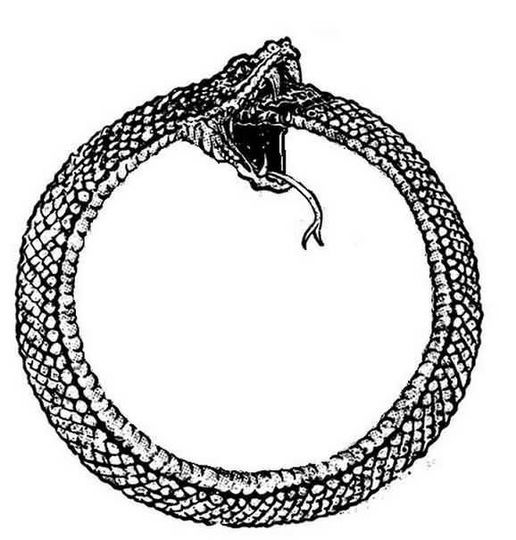
“Esoteric Teaching is to make us think differently. That is its starting point: to feel the mystery of one’s own existence, of how one thinks and feels and moves, and to feel the mystery of consciousness, and to feel the mystery of the minute organization of matter.”
– Dr. Maurice Nicoll
The year was 1988. A frustrated Michael Dukakis was going to concede the presidential election and the Berlin Wall was just about to come down. I was about 4 years old. One evening, I was playing on the floor in my room next to one of those old stools with the slanted mirror attached for trying on shoes. If you were born after 1990 or never saw an episode of “Married with Children,” you probably don’t know what I’m talking about, but the memory is so vivid to me that I can still get a whiff of that dank mildew smell wafting out of the dingy orange shag carpet I was sitting on. I remember I would grab clumps of carpet fibers like grass between my fingers as I would brush my hands over the surface. Sometimes it felt like looking down on fields of grain from the sky.
What struck me most though, was a subtle sensation that suddenly came over me. Yes, it was subtle, but stopped me dead like a brick to the face. “I’m here.” It wasn’t a thought, nor were there words. It was just “BAM!” like a trumpet in my ear or a shotgun blast, this feeling of being here and now. It was so natural and yet so peculiar, unlike anything else. I could feel my-self, and yet I wasn’t me. Even the idea “me” felt foreign. I looked down at my hands and it seemed like they weren’t even mine. I saw them pressed up against the glass of the slanted mirror and it looked to me as if the fingertips were slowly merging into another reality just beyond the reflection.
I felt as though I immediately understood the answer to a question I had never asked. Everything was alive, radiant, and vibrating. My little existence seemed to diffuse into a vast and incomprehensible void, yet this impossible vastness was close to me and I could feel its silent whisper in my ear. All this, for a little child, who by all other accounts was just sitting on a dingy orange shag carpet, staring off into space. It was peaceful. This was home. I hadn’t even felt this way about my actual home or my family before and not since. Every shred of worry, doubt, fear, and hurt evaporated like dew in the morning sun.
I was no one in particular, I just was. It was such a sublime experience that I immediately ran to my mom and excitedly blurted out my profound realization to her: “Mom! I’m here!”
She paused for a moment and looked at me quizzically. She then replied, “that’s great Frankie,” and went back to what she was doing. I just stood there for a second. Then the wonder dissipated, and the old world crept back in with all its worries, doubts, fears, and hurts. I sauntered off disappointed, but I didn’t realize right then that that moment would be the most definitive moment of my life. I had felt something of the mystery of consciousness, as Dr. Nicoll puts it, but I had no context for the experience. The only thing I could articulate out of it was “I am here.” That sensation, though, of “I am here,” is the most strange and wonderful thing, and strikes at the heart of what esotericism is.
Ok, so what is it? Esotericism gets used interchangeably with occultism, so let’s look both up. Merriam-Webster’s defines esoteric as “difficult to understand” or “limited to a small circle,” and occult as “not revealed,” or “hidden,” and that’s a good summary: the study of that which is not revealed or hidden, which was traditionally reserved for a small number of initiates (Merriam-Webster.com). That begs the question though: what is hidden? Aren’t things just as they seem?
Take this thing we call “reality” for a moment. Are we seeing it as it is? Can we find some examples of how we don’t? Look at the diagrams below. Are squares A and B different shades of grey or the same?

Ok spoiler alert… they’re the same.
[Images from Wikipedia]

Square B appears at first to be a lighter shade of grey doesn’t it? That’s because your brain notices the checkered pattern and expects it to be a lighter surface, only slightly dimmed by the cylinder’s cast shadow. The brain reconstructs the image according to its expectations! It turns our brains are quite adept at recognizing patterns and quickly filling in gaps in our perception with their best guesses.
We went through one example here, but there a many other optical illusions to illustrate the point that we don’t see things as they are. In fact, Anil Seth, neuroscientist from the University of Sussex, tells us that much of what we encounter as the “real world” is a controlled hallucination (Anil Seth, YouTube). In his Ted Talk, he says "in fact, we're all hallucinating all the time, including right now. It's just that when we agree about our hallucinations, we call that reality.” He goes on to say that, “we don’t just passively perceive the world; we actively generate it” (ibid.).
Whoa! Hold on there! Hallucinations? Distorting? But reality looks real to me! Why would we have developed to not see things as they are? Wouldn’t it make more sense for our perception to get more accurate as we evolved? Dr. Donald Hoffman, Professor of Cognitive Science from UC Irvine, disagrees. He has demonstrated through mathematical models that we’ve evolved to not see things as they are in order to increase our biological fitness (Donald Hoffman, YouTube). In his models, the organisms that perceived more accurately and directly tended to die off and those that only got enough information to help them eat, excrete, and procreate fared much better. So, our perceptive faculties have evolved to help preserve our bodies and facilitate the propagation of our species by only showing us a distorted fraction of how things exist. This brings us to a looming problem for science. They even call it “the hard problem.” I’m talking about consciousness.
"Do I see myself as I am? This is one of the central questions addressed by occult philosophy. It’s primarily concerned with the nature of self, its source, and how the two are related."
According to Dr. Hoffman again, the conventional view is that consciousness is an epiphenomenon, meaning that the physical and chemical processes in the brain give rise to self-awareness as an emergent property. In short, this means consciousness is a product of matter. Scientists call this the materialist view of consciousness as opposed to the dualist view, the latter proposing that consciousness is causal and is not a product of matter. This may remind you of the famous statement of Rene Descartes, “cogito ergo sum,” or “I think, therefore I am.” The debate is far more detailed and nuanced on both sides, but neither view has been satisfactorily proven to date. However, this dilemma is more often referred to as the mind-body problem. We know philosophers have wrestled with it since at least the time of the Buddha and Plato, around 400 BCE, from their writings on the relationship between matter and thought (Wikipedia). Yet, consciousness was just one of the mysteries our ancestors were dealing with and they must have been far more concerned with the endless supply of danger from the natural world.
Before science, how were we supposed to interpret all the terrible and mysterious forces of nature constantly colliding around us? It appears religion emerged to explain the observable patterns of celestial bodies and their perceived effects on our terrestrial experience. Whether it was the sun seeming to disappear at night or during a solar eclipse, rain or drought, earthquakes, lightning, or the countless other perils that bombarded early humans, the need for a narrative to give context to their experience became the fertile soil in which religion would proliferate. Our ancestors viewed these forces as entities, worshipped them, and attempted to manipulate and appease them through ritual. The very word religion comes the Latin re-ligare, meaning “to bind together again” (Online Etymology Dictionary). Similarly, the term Yoga, used in so many eastern religious practices, is Sanskrit for “union” (ibid.). Both convey this idea of achieving wholeness and imply that our current state is one of fragmentation.
So, are we fragmented? I feel like one person, one individual me, don’t I? Don’t you? But, if you really pay attention, you may notice the constant torrent of conflicting thoughts, feelings, and sensations all crashing into each other just below the surface of the veil of individuality. Yet no one else can see this going on in you even though everyone else is having the same experience! So, on top of not seeing things as they are, we also don’t see other people as they are. That begs the question, do you see yourself as you are? Do I see myself as I am?
This is one of the central questions addressed by occult philosophy. It’s primarily concerned with the nature of self, its source, and how the two are related. But our neuroscientist friend, Anil Seth, has something interesting to say about our sense of self. He says, “your experience of being a self, the specific experience of being you, is also a controlled hallucination generated by the brain."
*Silence*
*crickets*
Yeah, that may be a lot to swallow and the western religions typically don’t like that idea, but how about esotericism? Many occult philosophies do share the idea that our usual sense of self is based on a false identification with our bodies or form. In other words, we take our appearance to be our whole self and thus are only aware of a fragment of who we are. The entrance to the Greek Oracle at Delphi is known for the inscription above its entrance, “man, know thyself,” implying that we take our sense of identity for granted. The Buddha taught that our sense of self is in fact an illusion and arises out of the aggregates we acquire from the world (Walpola Rahula, What the Buddha Taught). In the Bhagavad Gita, Krishna teaches Arjuna that the personal material self is impermanent and therefore unreal, in contrast to the Eternal Changeless Spirit, which is real (Bhagavad Gita, II.16). But wait, aren’t these major religions? What do they have to do with the occult?
According to many occultists, religion may have emerged from esotericism and they argue we can see the subtle influence of occult philosophy continuing through many of the world’s religions. The Mac Daddy of Western Occultism, Eliphas Levi, wrote,
“Magic is the traditional science of the secrets of Nature which comes to us from the Magi. It unites in a single science all that is most certain in philosophy and most infallible and eternal in religion. Yes, the supreme and absolute science is magic, the science of Abraham and Orpheus, of Confucius and Zoroaster” (Levi, Ritual and Dogma of High Magic).
He inserts the word, magic, here, which we haven’t defined yet, but for now, we’ll refer to it as the practical side of the occult. The word magic shares the same Persian root as the word magi used for the Zoroastrian priest class or the initiated (Online Etymology Dictionary). Levi asserted that the initiatory rites of many cultures and secret societies had the golden thread of an ancient universal doctrine running through them and this would be a foundational idea in Madame Blavatsky’s magnum opus, The Secret Doctrine. The medieval Christian mystic, Meister Eckhart famously extolled these same sentiments in the words, “theologians may quarrel, but the mystics of the world speak the same language.”
Indeed, some archeological and historical records seem allude to a tradition of teachings that run alongside the religious doctrines for the laity. Levi argues that these teachings were usually kept secret and “reserved for the education of priests and kings,” or initiates, and that many of the ancient temples and structures of the world were dedicated to the to the dissemination of these teachings through ritual drama (Levi). In fact, the earth’s surface is littered with megalithic stone monuments, many with precise astronomical alignments to celestial bodies.
For example, Stonehenge in England famously aligns with the setting sun of the winter solstice (Standford Solar Center). Similarly, Newgrange in Ireland, aligns with the winter solstice as well, but also with the Venus cycle (Robert Lomas and Christopher Knight, The Book of Hiram). Several of the temples at Egypt’s Karnak complex apparently have precise stellar and solar alignments as well (Stanford Solar Center). In fact, archeologist Aubrey Burl echoed Levi’s idea that such monuments were stages to enact ancient rites and rituals involving the sun, moon, and stars as deities (Aubrey Burl, Prehistoric Astronomy and Ritual). Burl also asserted that these rituals were often conducted by initiate priests.
However, Levi and Blavatsky made their claims in the mid to late 1800’s when the archeological record was much less developed, and contemporary historians have disputed the idea that there is a common thread among ancient religions. We know now that there was a remarkable plurality of belief among the Bronze Age cultures of Sumer, Egypt, and Anatolia. In a similar way, occultism is not one singular thing, nor are the religious and philosophical traditions that have influenced it through the ages (Andrew Mark Henry, Religion for Breakfast).
Levi was considered the most influential occultist of the 19th Century and he sparked an occult explosion that would take 1850’s Europe and the U.S. by storm (Wikipedia). Through his books, many were learning about arcane subjects for the first time. Levi introduced the uninitiated to the mystical traditions of Qabala, Gnosticism, and ritual magic. We now know that even those traditions were not singular, but themselves loose associations of beliefs and practices. The authors of the Gnostic texts didn’t refer to themselves as Gnostics, nor did they agree on doctrine (Andrew Mark Henry, Religion for Breakfast). Likewise, Qabala has a rich and varied history of internal debate and disagreement (ibid.). So, perhaps Levi may have been introducing an incomplete presentation of Qabala, but regardless he made the ideas widely available.
Towards the late 19th Century, Helena Petrovna Blavatsky would come to the United States riding the wave of spiritualism that was beginning to peak. It was such a popular craze that Abraham Lincoln and his wife Mary Todd were famously involved in some seances (Mitch Horowitz, Occult America). Blavatsky was very involved in the local spiritualism movement and eventually wrote her own tomes on the occult history of the universe and of humanity collectively titled, The Secret Doctrine, as mentioned earlier. Her work drew on Qabala and Gnosticism as well, but also brought in the Hindu and Buddhist traditions of the east. Blavatsky’s writings became the outline for a whole organization that’s still around today called the Theosophical Society, founded in 1875. Contemporary scholars have disputed many of its historical claims, but the T.S. and its members were instrumental in some contemporary social movements of the time, including Indian Independence and women’s suffrage. Blavatsky envisioned Theosophy to be a movement uniting east and west and bringing people into a harmonious rapport with each other.
Later in the 19th Century, some English Freemasons and occult enthusiasts decided to start an esoteric order based on cipher documents that loosely outlined a system of degree rituals and graded curricula in arcane subjects like Qabala, Astrology, Tarot, and alchemy. This was the birth of the Hermetic Order of the Golden Dawn in 1887, which molded such famous names of the occult as Arthur Edward Waite, S.L. MacGregor Mathers, and Aleister Crowley. Crowley would go on to be the most famous and infamous of them, becoming the head of the Ordo Templi Orientis and the Astrum Argentum. The Golden Dawn movement would continue to be influential, even after the order dissolved. Paul Foster Case was a member of the Second order and he would go on to found the Builders of the Adytum and make some valuable contributions to tarot.
In the early 20th Century, several other big occult teachers emerged on the world stage. Alice A. Bailey was an evangelical aristocrat turned occult student from England who came to the U.S. and joined the T.S. She went on to write 32 prolific books on occult philosophy, which she claimed were telepathically dictated to her by a Tibetan Master of the ancient wisdom. Her books elaborated upon the cosmology and philosophy outlined by initially by Blavatsky and developed it further. Both sets of books together basically comprise a whole system of esoteric philosophy.
G.I. Gurdjieff was another such titan of the early 20thCentury occult scene. He was decidedly different from the rest of them because he wasn’t repackaging old ideas or ancient religions. Gurdjieff basically said that all people are in a condition of “deep waking sleep” (sounds like controlled hallucination a bit doesn’t it?) and that we can only get out this condition by remembering ourselves. He said that what we understood as I, the self, is a false projection and that through self-observation a person came to know their essence or real I. Gurdjieff’s teachings also comprised a unique system that would become known as The Fourth Way, but he would maintain they should be called Esoteric Christianity.
There were many other systems, organizations, and teachers that emerged along this line. I’d love to elaborate on Rudolph Steiner, Yogananda, Helen Schuman, Ramana Maharshi, Ramakrishna, Swami Vivekananda, or the Maharaj Sri Nisargadatta, but that’ll have to be for another time. The point is that they all offered different presentations of and solutions to something they saw as universal: the human condition. Each of the systems and organizations listed above espoused the idea, in some form or another, that there is much more to us that we think. They all tried to tell us that we all have a whole universe inside, waiting to be explored, but that the tragedy is most of us never do.
Is there life after death? Do we reincarnate? Would you believe any of these jokers if they told you? The fact of the matter is that we must experience things for ourselves and find our own answers. Taking someone else’s word for it will never satisfy a lover of truth. I am confident that every author enumerated above would agree. They all promoted direct perception of reality for one’s self. Realization only happens through experience, which is one reason why ancient cultures and modern occultists use ritual dramas. They explain ideas through symbols and metaphors because we have tendency to think in linear terms and the universe doesn’t always operate that way.
Jesus’s disciples asked him, “why do you speak to them in parables?” He replied, “because having eyes they do not see, having ears they do not hear, nor do they understand” (Matt 13:10-14). Understanding then is the key, or rather our capacity to understand. Therefore, one of the reasons we have esoteric teaching then, is because not all people are at the same stage of development. For some people, the old wine is good enough and pouring in new wine may burst the old wine skin! The Qabalists also forbade practitioners from sharing spiritual visions they may have because they believed that the secrets of the inner workings of the universe could be dangerous in the hands of the profane (Andrew Mark Henry, Religion for Breakfast). That practice of safeguarding hidden knowledge was not isolated and extends to contemporary mystery schools and orders. In an infinite universe though, our understanding merely approaches truth and is therefore is always just an approximation to some degree.
Now that we know occult philosophy isn’t one thing, has a rich and circuitous history, and is comprised of many threads from many traditions, and not all in agreement, we may ask ourselves now, what use is it for me to study the occult? Well, it is only useful to you if you recognize that it is useful to you. That sounds like a painful tautology, but it is the true. A certain teaching or doctrine will be of no use to you if you don’t recognize its value and that brings us right back to where we started with Dr. Nicoll’s reference to the mystery of consciousness. You see the thing that the many occult traditions try to do is equip you with tools to investigate your own consciousness. Those tools are ideas and practices, like the idea you’re invisible and that other people are invisible to you, or the practice of self-remembering, or the idea that we don’t see things as they are, or the idea that we’re fragmented, or even astrology. These ideas challenge our assumptions about who we are and how we exist. They shake up our sense of reality and disturb our sensibilities, like when the anesthetic suddenly wears off. We need these shocks to loosen up our rigid thinking because it’s quite difficult to teach anything new to a mind that already assumes it knows.
When I was starting out though, I admit I was bewildered. I had to rely on the guidance of others in my own ignorance, but never forget that you must choose whose guidance you submit to. I would get anxious when I discovered contradictions between systems and teachers I was studying. “Which one is right?” I would frantically wonder. It took me a lot of anxiety and undue suffering to realize that it didn’t matter. What matters is what teaching is most congenial to you in this moment. Here is where you are at. Therefore, what resonates with you most should be your starting point and don’t expect to carry that same teaching with you forever. They are all just guideposts because truth is an unending process of revelation.
So what teaching is the right teaching? Whatever you are doing right now until you realize that it is no longer useful to you. All roads lead eventually to Rome. The most important thing is the quality of your approach. If there is one thing that I have found to be of indispensable use along this way, it is this: approach all of life as an adventure and with a childlike sense of wonder. Remember that you are always on the precipice of new discovery. This is an attitude to cultivate. Strive to recognize the magic and value of every moment. Be here now.
The occult and religious traditions we discussed have their own rituals and practices, which would constitute a whole other article, but suffice it to say that ritual and practice is an integral part of all of them. Rituals can be crafted in such a way to put the candidate through an ordeal, a very real experience that can make their minds and emotions more flexible and receptive, thus allowing them to understand certain things in a new way. Theory is useless without practice, just as practice is blind without theory. Therefore, our rites and rituals can be the carefully regulated environments in which to induce very real revelations, if we can relate the two in a coherent way.
You may be a bit disappointed that we’re finishing this little article off with more questions than answers, but perhaps you may take solace in this idea from one of my favorite movies, Contact, starring Jodie Foster. An alien character who appears to her in her father’s visage says, “in all of our searching, the only thing that we’ve found that makes the emptiness bearable is each other.” We are thrown into this world, seemingly without a choice, against our will, and with very little support to endure this existential terror. Upon this backdrop, divorced from any other speculations, we are faced with the reality that we may have no one else but ourselves and each other in which to take refuge.
That may seem daunting, but I can tell you from experience that if you hold an intention in your heart with burning intensity, if you have an unquenchable thirst to know, and to understand, then somehow the universe conspires to help you. I don’t expect you to believe me, but that’s my experience. It’s probably just another mystery of consciousness. More to come….”


Comments